The short version
Plan poster projects around the learning already happening: a science question, a book, a class responsibility, a local season, or a student introduction. Keep a few open weeks in the calendar so the theme can follow the class rather than compete with it.
What to remember
- Start with the class topic or routine, then choose the poster format.
- Use a theme calendar as a prompt list, not a fixed schedule.
- Check the assignment rubric and available display space before preparing materials.
Build from the work students are already doing
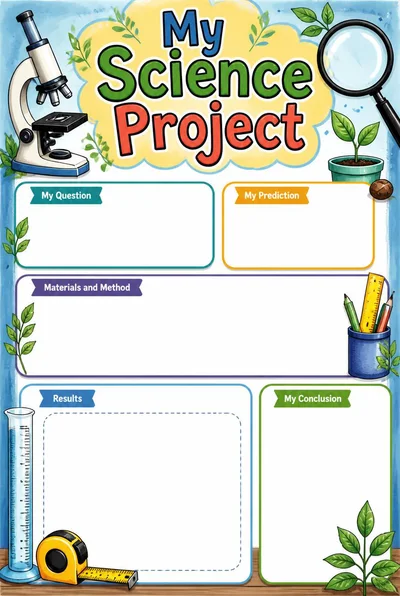
The most useful poster prompt often grows out of a current lesson. A science unit can become a question-and-evidence display; a class novel can become a character map or book recommendation; a community topic can become a set of observation posters. This keeps the making connected to learning instead of adding another unrelated assignment.
Before picking a format, check the teacher's instructions, required facts, and age-appropriate sources. A visually appealing layout cannot replace correct content, and a template should leave enough room for the exact work the class has been asked to show.
Use the school year as a menu of starting points
At the beginning of a term, students might introduce themselves, share a reading goal, or map classroom routines. During a research unit, posters can organize evidence about an animal, inventor, place, or scientific process. Later, a class can reflect on a project, explain a way to care for the local environment, or share a book that mattered to them.
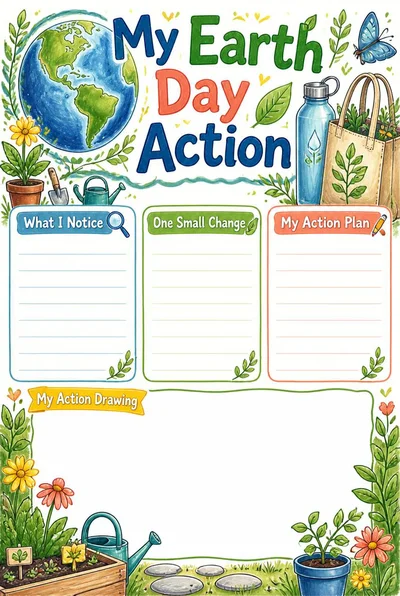
Seasonal moments such as a garden harvest, winter weather, or Earth Day can provide a timely hook, but they are optional. If a unit does not fit the calendar, use a topic from the students' current work and move the seasonal idea to a later year.
Match the page to the assignment
A research report needs a clear place for a question, a few facts, and sources. A book recommendation needs room for a title, a short reason, and an illustration. A class promise poster needs fewer words and a shared visual. Choosing the page after naming these parts helps avoid squeezing content into a design made for a different task.
Plan for the display surface too. A poster seen from across a hallway needs fewer, larger words than a page held at a desk. If students will write by hand, leave generous spaces and test the line lengths with the pencils or markers they will actually use.
Keep planning flexible and reusable
Save a short list of themes that worked, what students needed to finish, and which materials were hard to share. Next time, repeat the useful structure and change the topic. A small record is more practical than a packed calendar that leaves no room for schedule changes or unexpected student questions.
Ready-made poster printables can help when the class needs a clear starting layout. Use a template as a scaffold: students can add their own facts, drawings, labels, and examples, while the teacher checks that the finished work still meets the assignment.
Browse poster printables
Explore ready-to-print school poster layouts.